Control
Always know what you own, where each bottle is stored, and how your cellar is distributed by type, origin, and vintage.
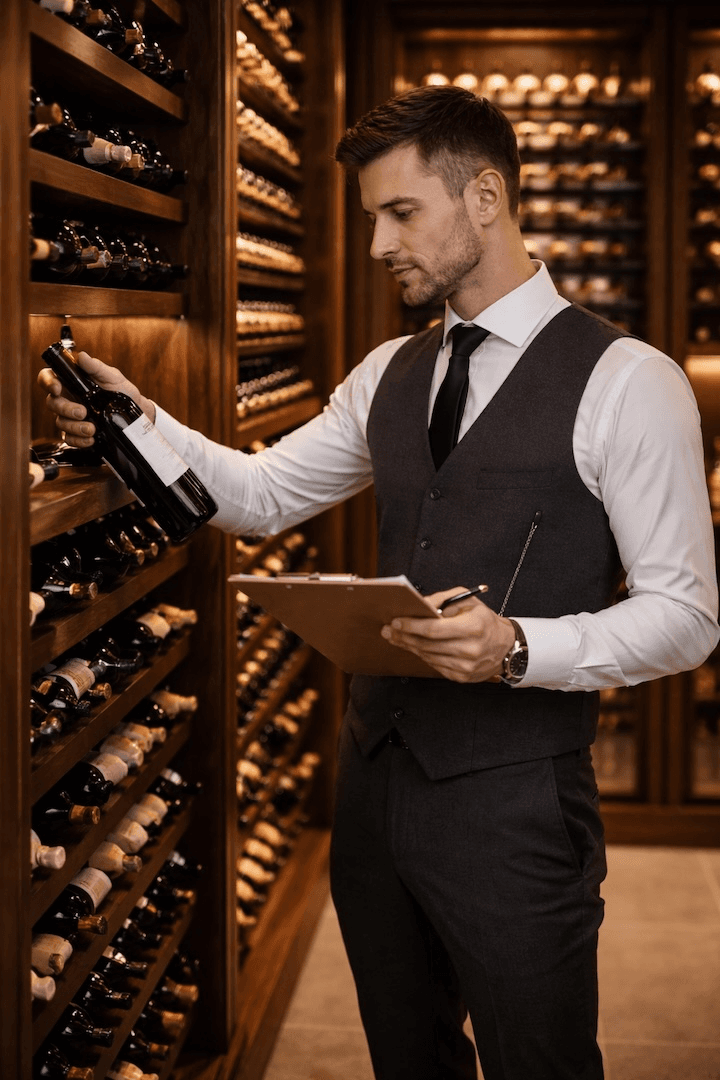
Always know what you own, where each bottle is stored, and how your cellar is distributed by type, origin, and vintage.
Receive notifications before wines pass their drinking window and use your history and ratings to plan better future investments.
Track your collection value and use inventory intelligence to plan purchases based on real consumption patterns.
Insights by Bjornstierne Antonsson. Small environmental adjustments make a big difference for ageing potential and flavor development.
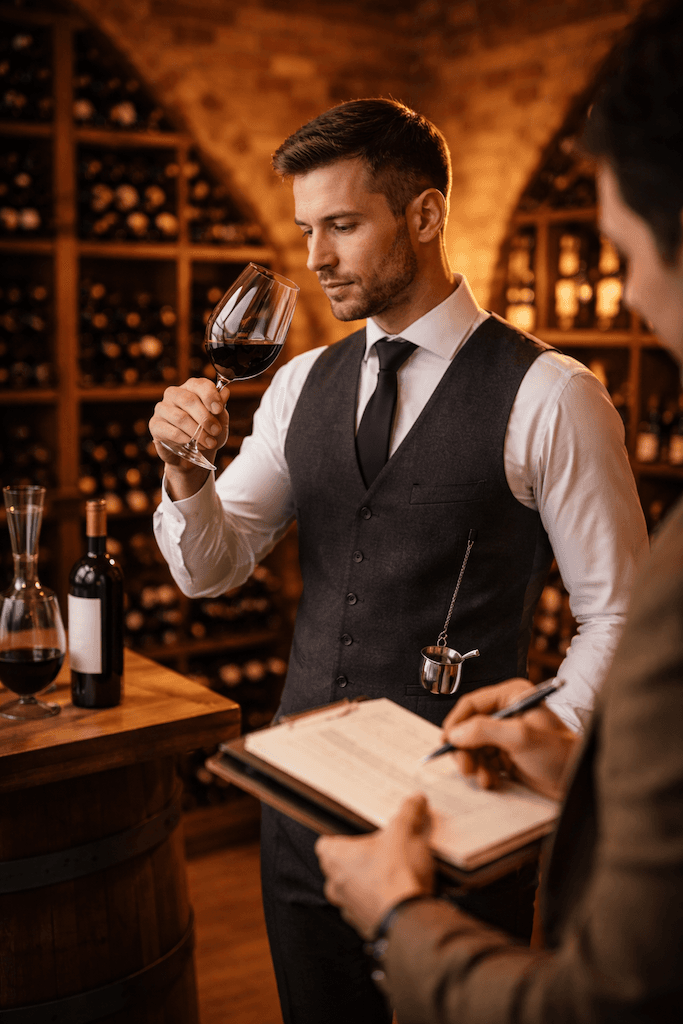
Best storage is usually around 10-14C. Avoid fast temperature swings over time.
Store wine in the dark. Strong light can negatively affect both color and taste.
Aim for relative humidity around 60-70% to protect corks and labels over time.
Good ventilation matters. Avoid storing wine near strong odors.
Let bottles rest. Unnecessary movement can disturb sediment and reduce clarity.
Classic guidance from the original ViniQ text on wine storage.
The best storage range is typically between 10 and 14C. At higher temperatures, wine does not become undrinkable immediately, but maturation speeds up and ageing potential shortens. When storage drops below around 7C, wine development slows significantly and may require more time to reach ideal maturity.
The key is not an exact daily number, but avoiding sharp and frequent fluctuations. Wine can handle some seasonal variation, but large short-term swings can affect the cork. For long-term ageing, including decades, a stable and cool environment gives the best results.
Relative humidity around 60-70% helps keep corks in good condition over time. If the air is too dry, corks may dry out, increasing the risk of unwanted oxygen exposure.
Very high humidity for long periods is also not ideal. Labels can deteriorate and mold can develop around capsule and cork areas. The goal is balance, not maximum humidity.
Let bottles rest as undisturbed as possible. Unnecessary vibration and movement can disturb sediment and reduce visual clarity, especially in older wines.
If sediment has formed, standing the bottle upright before serving helps particles settle and gives a cleaner experience in the glass.
Wine should be stored in darkness. Strong daylight and bright lighting can gradually damage both color and taste. White and sparkling wines are often more light-sensitive than many reds.
Long exposure can flatten aromatics and reduce complexity. A dark location or soft indirect light is a simple but highly effective quality measure.
Good ventilation is a clear advantage in any cellar. Unwanted odors in the storage environment can affect wine perception over time, even in sealed bottles.
Avoid storing wine near strong smell sources. A clean, cool, and well-ventilated environment makes ageing more predictable and gentle.
ViniQ is free to use, cloud-based, and built for wine collectors, wine merchants, and restaurants. Import from Excel or register manually, manage unlimited bottles across multiple cellars, and keep full history of purchases, consumption, and tasting notes.
News & Blog
We are excited to announce the return of ViniQ, now featuring comprehensive daily updates that deliver enhanced features and improved performance for a superior user experience.
We are pleased to announce the relaunch of ViniQ, now offering a full suite of updates on a daily basis. This upgrade delivers enhanced features, increased reliability, and a seamless user experience designed to meet your needs consistently every day. Stay tuned for ongoing improvements and new functionalities as we continue to evolve the ViniQ platform.
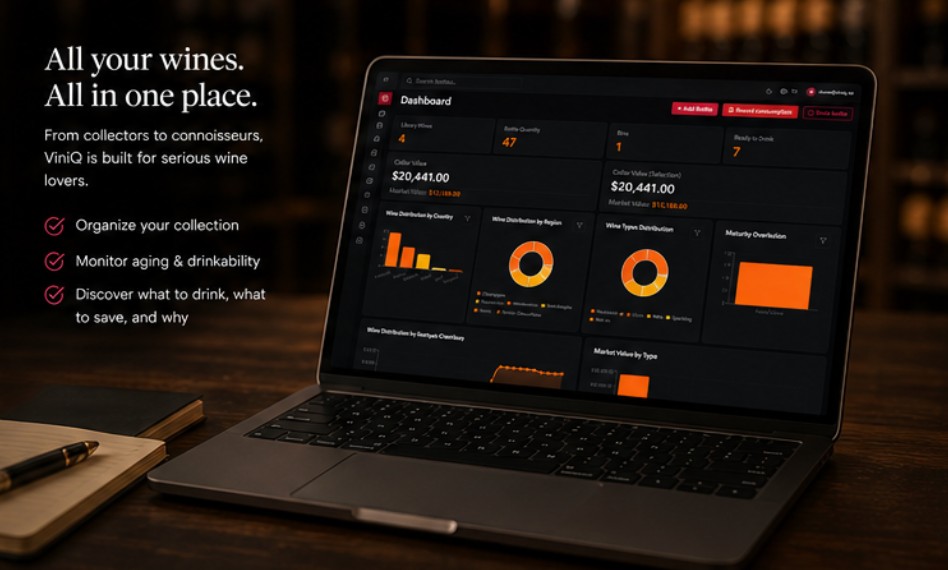
Discover how the updated Viniq wine management system empowers you to take full control of your cellar by tracking maturity windows, ensuring every bottle is enjoyed at its peak.
What’s Happening Behind the Scenes
We are excited to announce the successful launch of the newly updated Viniq wine management system. While the rollout has proceeded smoothly, we remain dedicated to continuous improvement. Over the past four weeks, we have delivered daily updates—sometimes multiple times per day—to optimize performance and enhance your experience.
As we advance confidently into the future of wine storage and management, our priority remains delivering meaningful value to our users.
Maximizing the Value of Your Collection
Effective wine management depends on maintaining control over your stored bottles, particularly by understanding and tracking their maturity windows. This is where Viniq truly stands out.
Our system ensures that no bottle is overlooked or allowed to over-mature. Central to this is the Cellar Control Tower —your comprehensive dashboard—providing a clear overview of your collection and highlighting bottles that require your attention.
Additionally, our quarterly Maturity Digest emails offer timely, friendly reminders to keep you effortlessly informed about your cellar’s status.
Cutting Through the Noise
Managing a wine cellar can quickly become overwhelming. Viniq helps you cut through the clutter by prioritizing bottles based on their maturity windows. This enables you to know exactly which wines to enjoy, hold, or consider selling.
The result: fewer missed opportunities and more wines savored at their peak, just as they were intended.
Your wines are worth a little more care. ViniQ gives you and your wines a better everyday experience.
Questions before signing in? Send us a message and our team will open a support ticket.